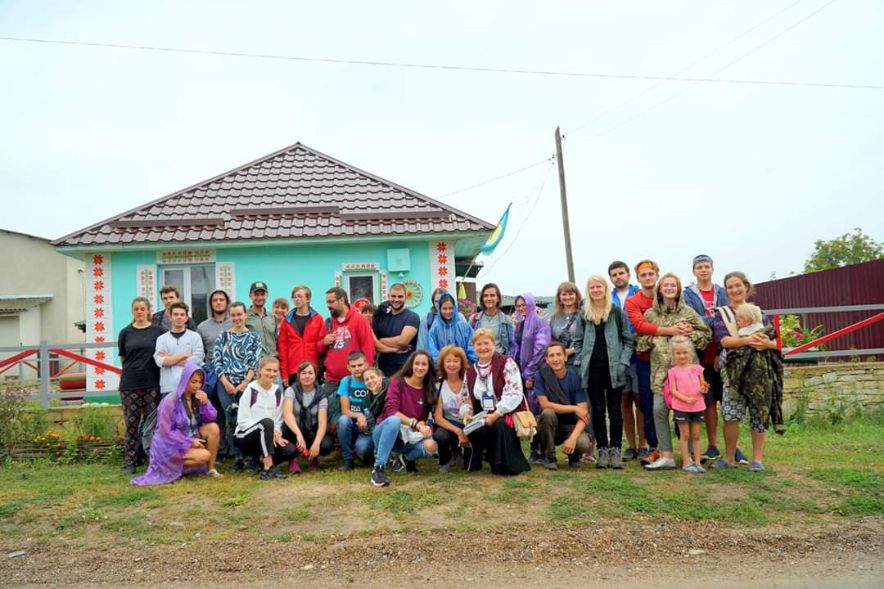
The youth exchange “Terra Incognita” took place from the 29th of July to the 6th of August in a village called Stina, in rural Ukraine. Seven young Bulgarians took part in the project, along with other participant from Ukraine, Croatia and Lithuania. Keep reading to live the experience from their perspective!
Adam Karlov: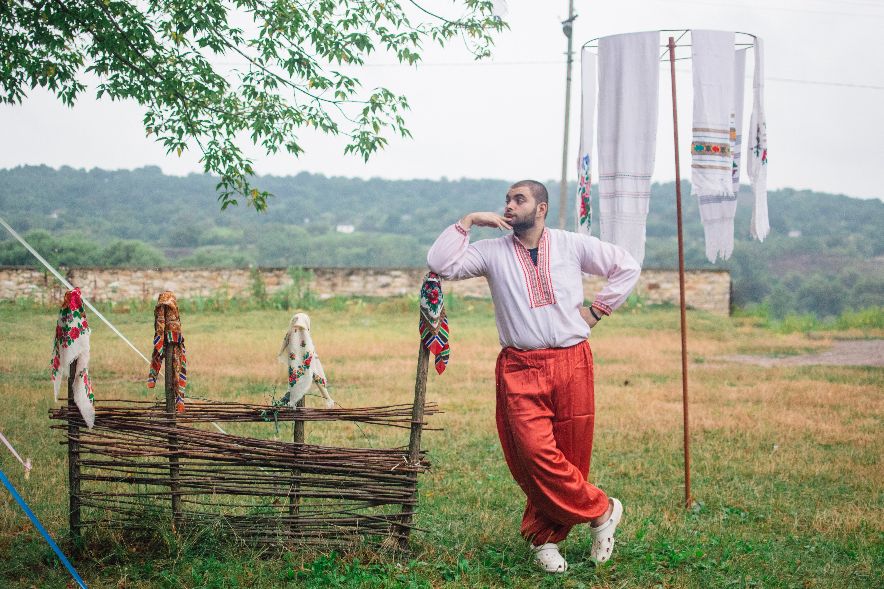
I've never seen the past so close after this experience, in a village in the middle of nowhere in eastern Europe. I had expectations; some were fulfilled, others not, but after this whole experience I'm glad I took part in this project. I met a lot of people, travelled and learnt a lot about life in villages in Ukraine, cooked on a fire, slept in tents and learnt some Russian. I’ve seen how people bake bread, make clothes, how to produce sunflower oil and a lot more.
It felt like going back in time.
Svetla Peycheva:
I love nature and like to use every chance I have to be close to it, so for me the best part of this project was that everything was happening outside, which is entirely different from what I'm used to. I also love to get out of my comfort zone and from the beginning I knew this would be a challenge, even though I was looking forward to it.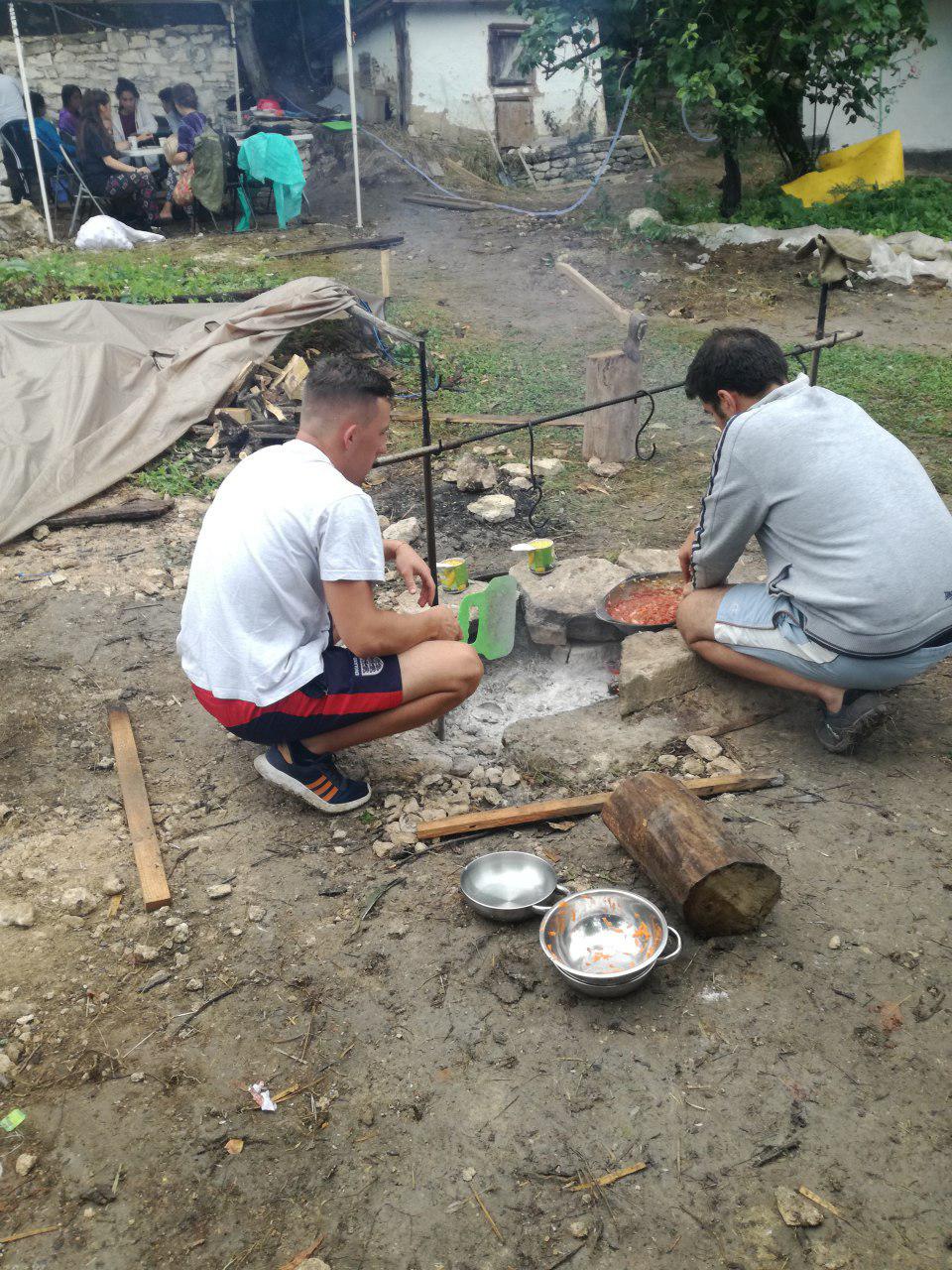
We slept in tents, cooked over a fire and used compost toilets. The first evening because of the rain my tent got really wet. Even though it was very nerve-racking it was also funny and a very useful and practical lesson.
Another challenge that we had to overcome was the fact that we had no warm water. Thanks to the people who arrived at the camp earlier than us we had connected pipes to the nearest wells and that allowed us to have running water most of the time.
The third major challenge was cooking: our chef needed at least two hours and several people to help her in the preparation of our meals. On the one hand, it was a bit difficult to get used to that but in the end, we all learned lots of useful skills.
The last challenge was the language. All of our activities were in Ukrainian and sometimes it was difficult to understand. Towards the end it turned out well, as we were all speaking some Russian and even understanding some Ukrainian.
I honestly had a lot of fun dealing with our living conditions and I believe I learnt how to accept the negative and turn it into something positive.
Vesela Delcheva:
My name is Vesela Delcheva, I’m 17 and come from Svilengrad, Bulgaria. This summer I had the opportunity to go to Ukraine for a youth exchange. 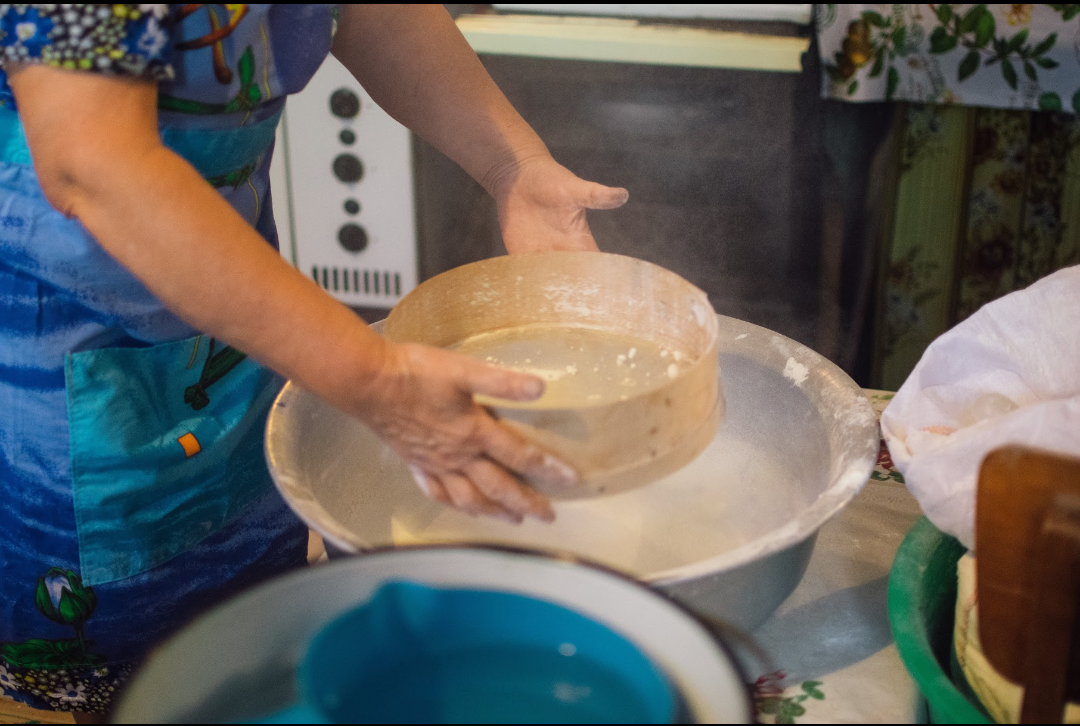
We spent a night in Kyiv before we got in Stina. In the village, we slept in tents and cooked over a fire. It was not easy, so every day we had a help team,who helped us in distributing our duties and helping the cook.
We had interesting activities like baking bread, working with clay and knitting a rug. A local grandmother showed us how to knead the dough for the bread. She put it in a special furnace and then she prepared 5 loaves of bread, which was very tasty.
Also, we had a lot of organised hikes and were able to explore the village and the surrounding area.
There was another project in a nearby village and we had the opportunity to get to know them, to exchange some ideas, to make new contacts with different people.
The whole experience was amazing and I was able to make new friends. I hope to have another opportunity like that- to visit different countries and to learn more about their culture.
Kristian Popov:
The Eco-Centre in Stina offered a great opportunity to delve into the Ukrainian way of living and thinking. Its setting in a remote rural area made us think about our own lifestyle. We participated in the maintenance of the camp, so we not only discussed abstract ecological matters, but also experienced them ourselves.
Being in Ukraine required communicating in Russian, a language I had never studied, and using the art of gesture. This helped me enhance my language ability and consider the fact that "European identity" is a much broader term than what we usually comprehend.
Speaking to the locals was memorable. It included sampling fresh bread, milk and other local produce, combined with hour-long conversations in the Ukrainian version of Esperanto. We also had the opportunity to express our ideas while sitting around the fire and enjoying the universal language of music.
I believe that this Erasmus project fulfilled its aims. The coordinator Iaroslav Geraschenko succeeded in the organisation of the camp and made me reconsider my views on different lifestyles and cultures. This was done in a very informal way, through experiencing a life closer to nature and other people. I therefore consider the project hugely successful.
Ana Stoyanova:
Going to Ukraine was something I was not sure what to expect from. I decided to go mainly because of the topic of the project, which I really feel close as rural tourism is something I have always been interested in. The fact that the whole project was taking place in nature was also something that added up to my decision, and I wasn’t disappointed at all.
Iaroslav, the coordinator of the project, had prepared many interesting activities connected with crafts and the everyday life of locals. My two favourites were the bread baking with Svitlana and the media lesson, where we had to create our own material with a subject of our choice but also connected to the village.
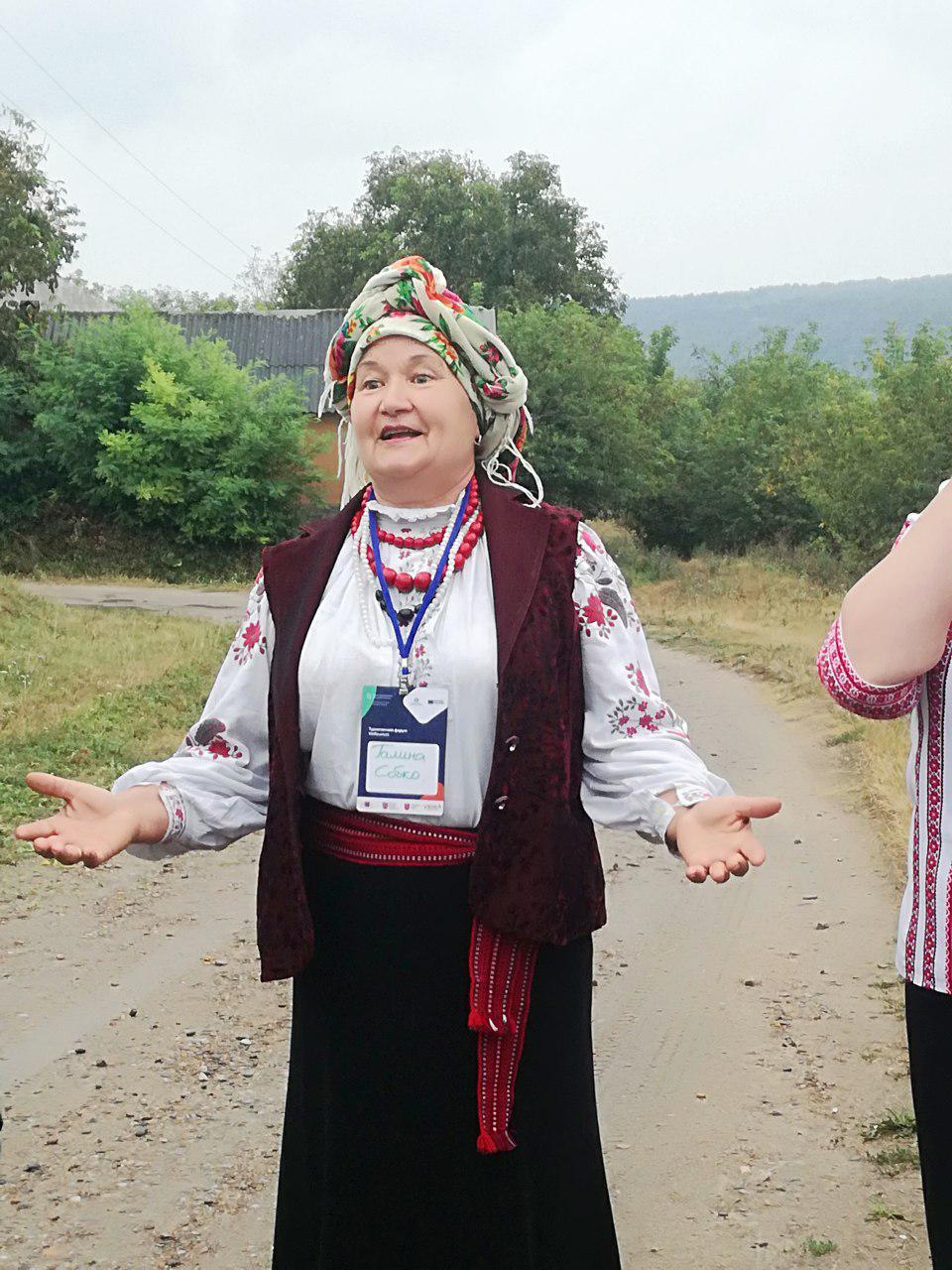
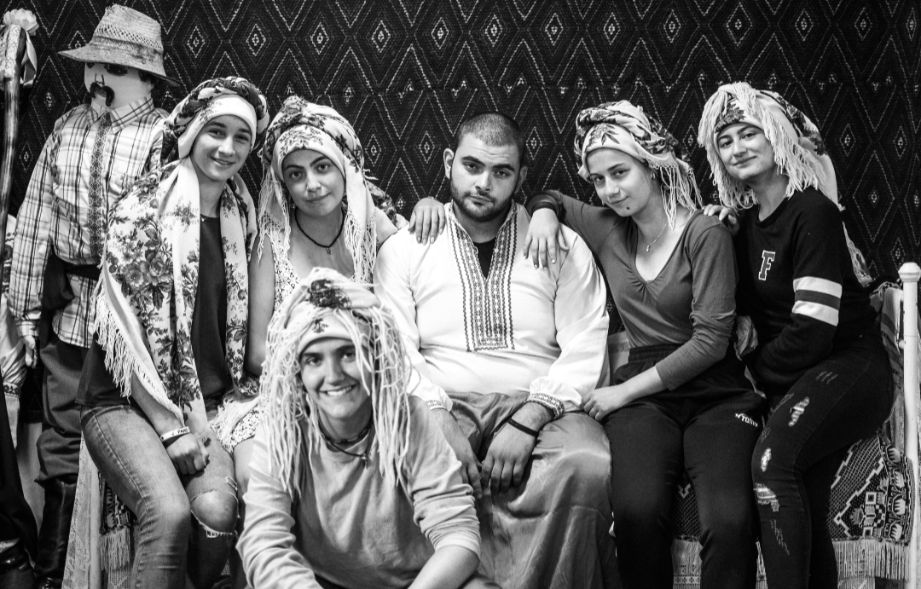 One nice surprise was the trip to Oskanivka, where we were welcomed by the grandmas of the village dressed in traditional Ukrainian dresses and with home-made pastries and kompot. They gave us the chance to try on the clothes and take photos with them, so we could really feel the culture of the place. They also sang to us and told us more about their aim of turning the village into a tourist attraction in order to preserve it, which I really felt inspiring and motivating.
To sum up, I would say that I had a great time in Stina. I learnt many things about the culture of Ukraine, got in touch with real village life, met many amazing people, made new friends and, most importantly, I saw that change is really possible, that you don’t need to wait for something to happen but to take the initiative and act. I realised how people can cooperate in order to create or preserve something.
Vasi Kolarova:
I have never lived in a village and didn't know what life is like there. I am used to "modern“ things like bathrooms, hot water and Internet. That‘s why I wanted to participate in this project; I wanted to escape from modern life and challenge myself.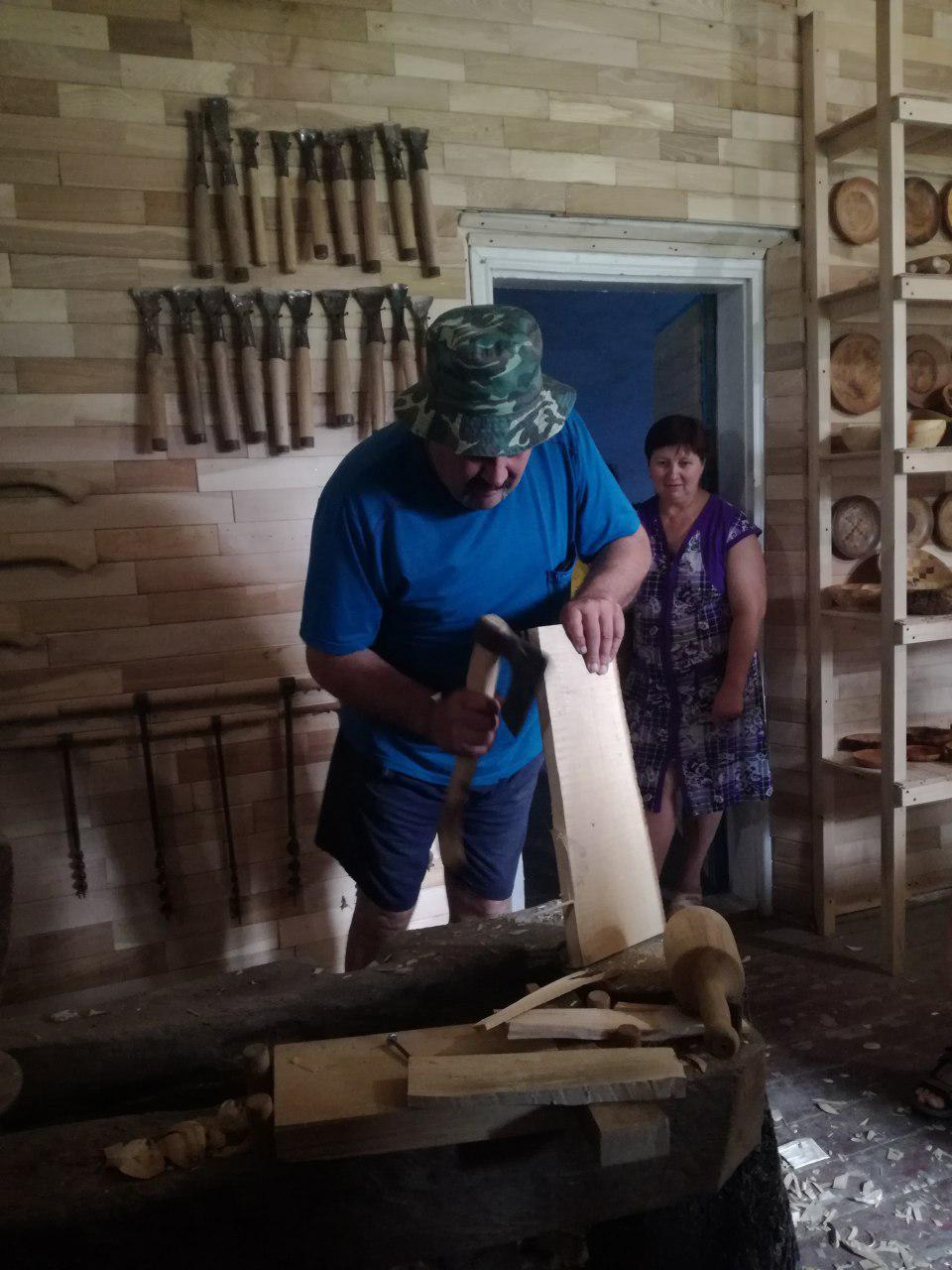
I learned and experienced a lot. The first day we went out of the camp for a quest. I really liked the walk in and out of the village where we had the opportunity to enjoy the picturesque view from the hills surrounding Stina. The intercultural evening the next day was amazing because I learned a lot about the other countries and people, tried traditional food and listened to traditional music.
We had the opportunity to see how oil was made before the big industrial machines, it was educational and interesting. Local people were really hospitable, they shared with us their homes and food. I also liked the clay workshop. We built a wall the way our grandparents did.
This project was a great opportunity for me to see life in villages, to enjoy the atmosphere and to see how my grandparents lived in these conditions. I realized that I don‘t need modern things, like Internet and hot water, which I missed a lot on the first day. This project changed my life and helped me look at the world in a different way. Even better was the fact that all this happened in a different country with different people. I learned a lot from them.
Borislava Nikolova:
This summer exchange in Stina, Ukraine was an important experience for me. I learnt what everyday life in a village looks like and how people manage to survive. I was surprised that they didn’t have sewerage and that the toilets and the bathrooms were placed outside of their houses. However, it took me only a few hours to get used to this situation and appreciate what we had there. I learnt how to pull out water from the draw well by myself.
In the camp we had to take care of a lot of things. We had to cook for ourselves with the help of Ludmila who was very thoughtful and fair. She taught me to work in pairs and give my most in every situation. Thanks to the workshops I acquired some practical knowledge of the crafts and traditions of people in that area. We had the chance to try most of the things by ourselves. During the learning sessions, we were able to share our thoughts through presentations and non-formal discussions. I was new to this type of learning and I really liked the way we talked to each other. This gave me another perspective about the world around me as well as some ideas about improving the rural areas in my own country. I learnt that I can be a good motivator and a good critical thinker. I surely can apply now this experience in my future life/work.
